The Seen and the Hidden: (Dis) Covering the Veil


Overview
Presented at the Austrian Cultural Forum New York, The Seen and the Hidden: (Dis)Covering the Veil was a major international exhibition co-curated with Martha Kirszenbaum and Karin Meisel. Probing one of the most symbolically charged garments in contemporary dress, the exhibition examined how the veil acts as a lightning rod for debates on faith, secularism, gender, and public identity. Moving beyond simplistic Western tropes of oppression and Orientalist exoticization, the show brought together 15 artists across the Middle East, North Africa, South Asia, Europe, and the Diaspora to explore the literal and metaphorical meanings of veiling through painting, photography, video, performance, street art, and installation.
Project Context & Curatorial Role
As Co-Curator alongside Martha Kirszenbaum and Karin Meisel, I contributed to the conceptual framework, artist selection, and exhibition layout, presenting a nuanced, trans-cultural dialogue that bridged first-generation feminist pioneers with post-9/11 artistic strategies.
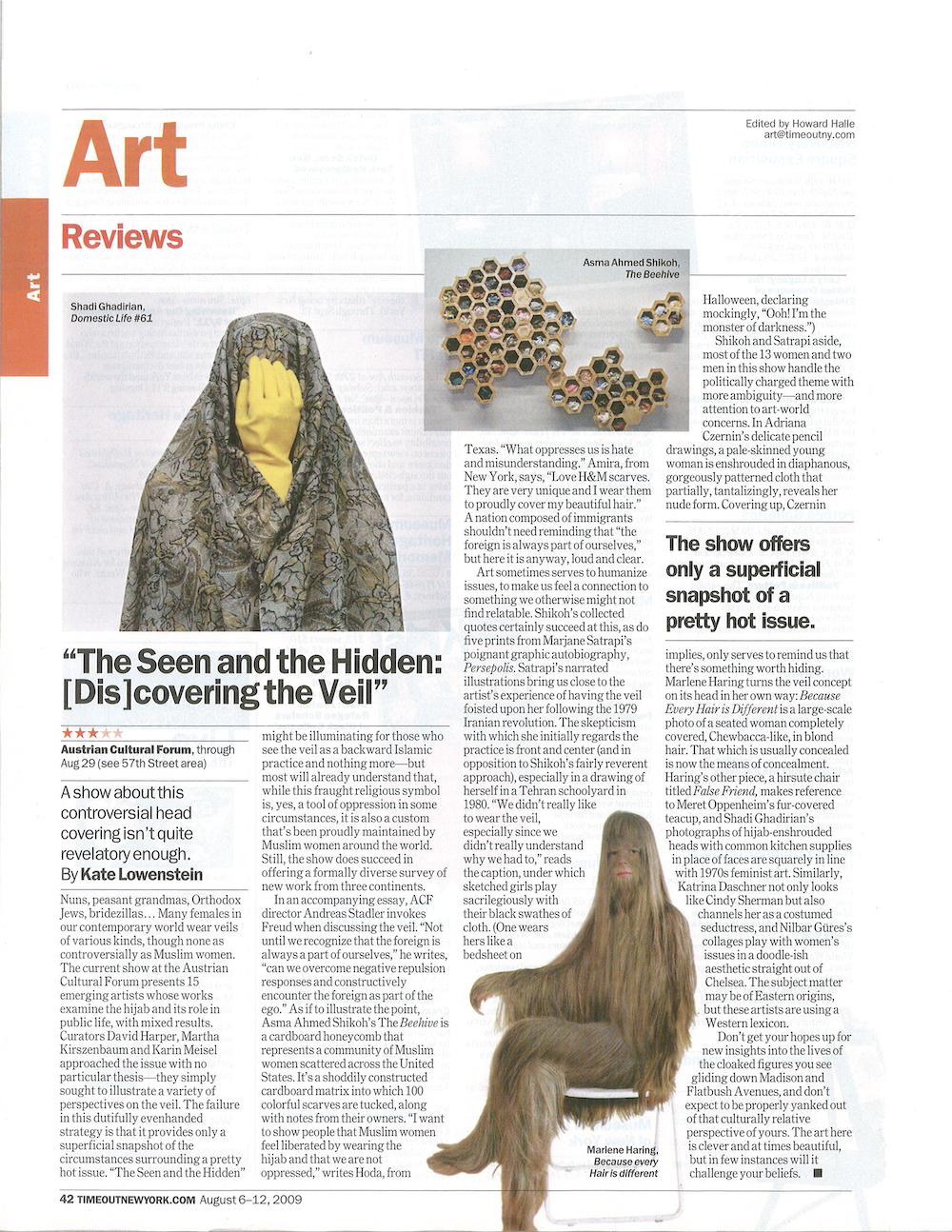
Several artists used tactile installations and humor to challenge Islamophobia and patriarchal constraints. Asma Ahmed Shikoh gathered hijabs from 100 American Muslim women to build her honeycomb-shaped Beehive Project; Negar Ahkami appropriated Russian nesting dolls in Persian Dolls to unpack layered Iranian identities; and Canadian artist Farheen HAQ explored the meditative, political qualities of veiling.
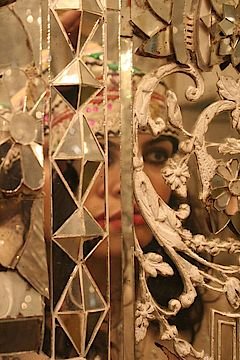
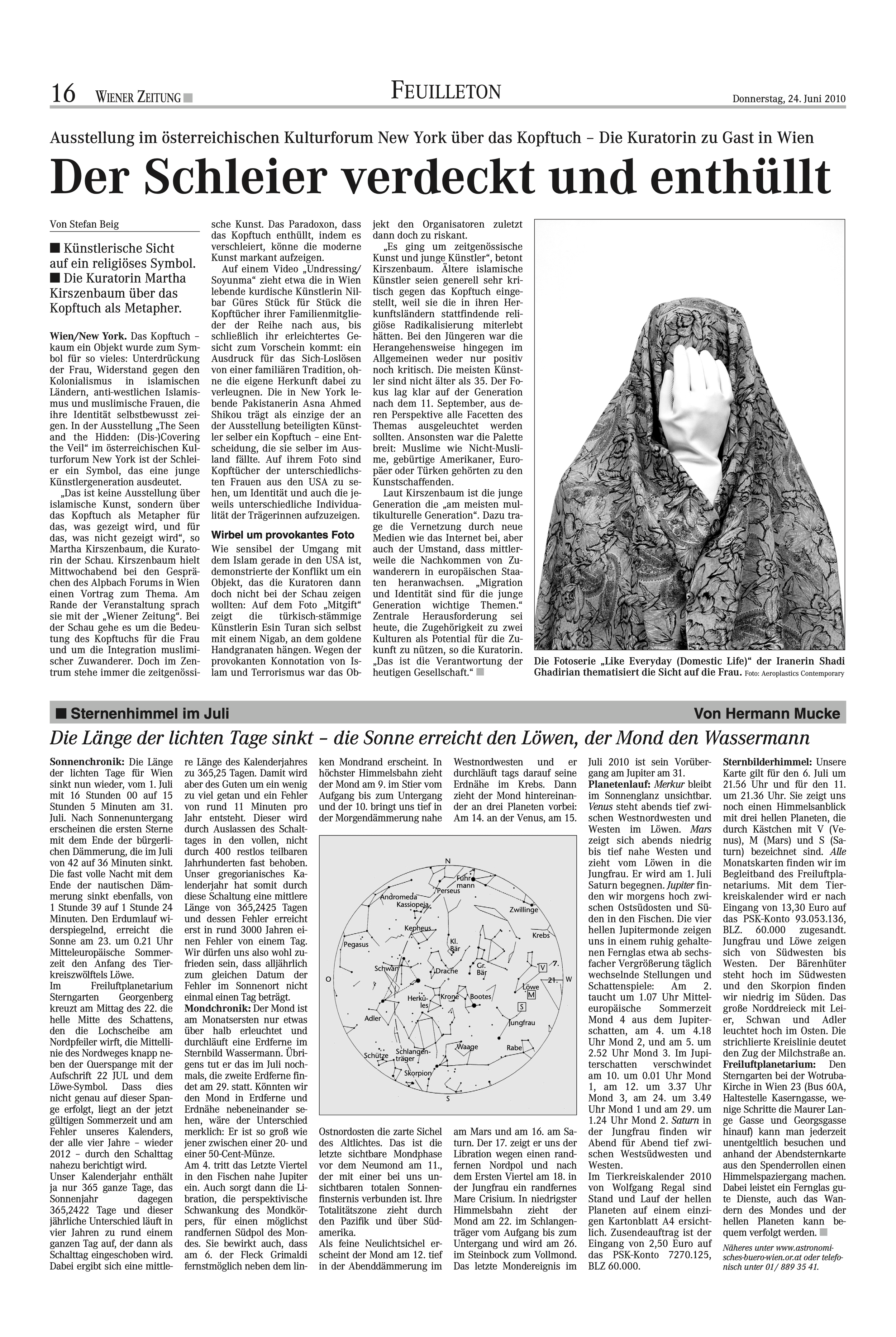
Highlighting the lived realities of women under the Islamic Republic, Marjane Satrapi presented excerpts from her autobiographical graphic masterpiece Persepolis; Shadi Ghadirian used satire to fuse Ghajar-era portraiture and modern domestic appliances; and Sara Rahbar created textile and photographic self-portraits exploring diasporic longing between Tehran and New York.
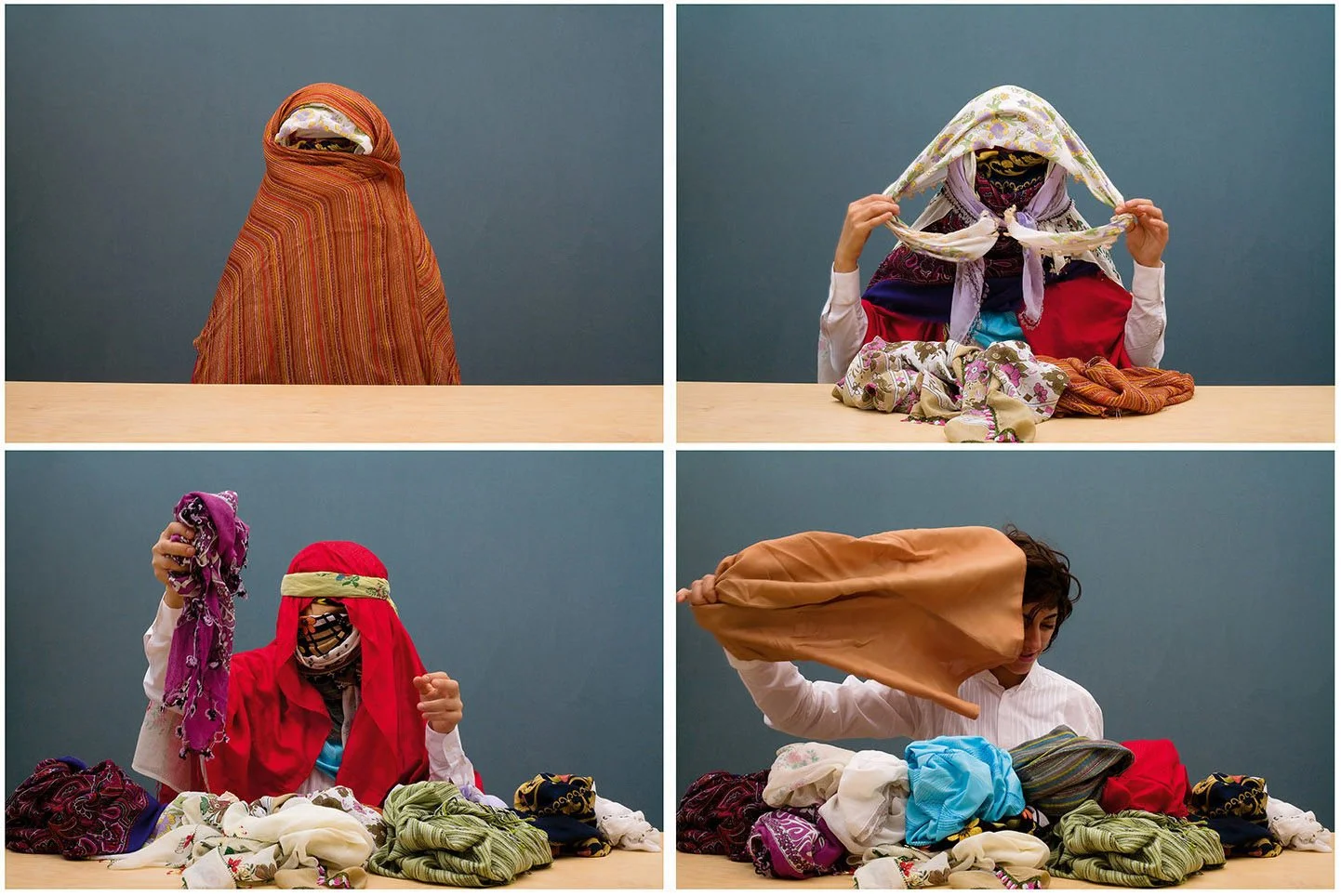
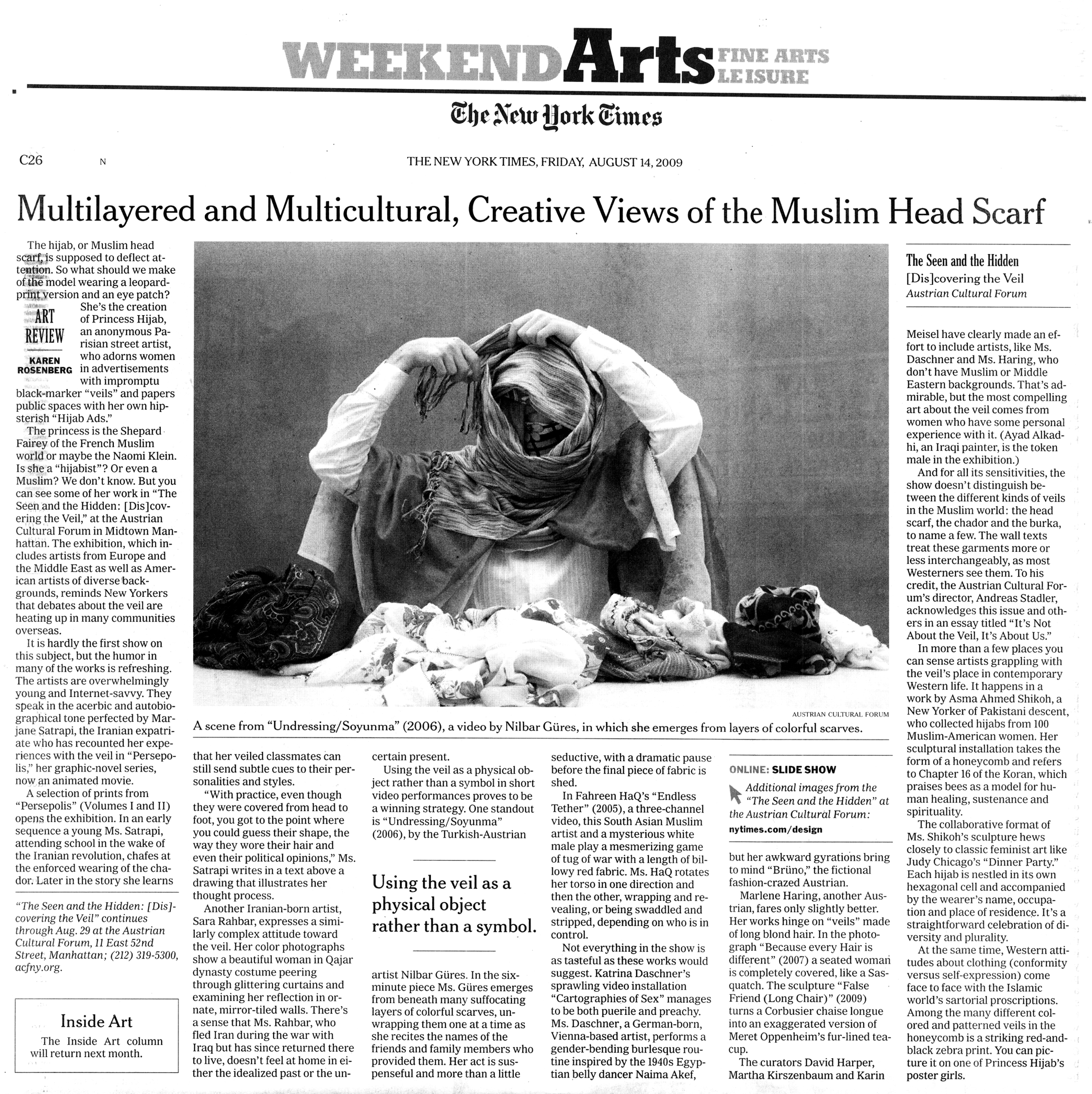
Nilbar Güres’ video Soyunma/Undressing metaphorically shed layered headscarves to confront anti-Muslim racism in Austria; Esin Turan paired veil imagery with provocative political symbols; and French street artist Princess Hijab engaged in guerrilla "hijabitisation" by tagging Paris fashion advertisements with black marker. Zoulikha Bouabdellah explored acts of revealing and concealing, while Ayad Alkadhi merged Arabic calligraphy with Western media collage.
Non-Muslim and Western artists interrogated privacy, hair, and unveiling through unexpected lenses. Adriana Czernin’s drawings echoed the geometric latticework of Arabic mashrabiya window screens; Katrina Daschner examined burlesque unveiling inspired by 1940s Egyptian cinema; Marlene Haring wrapped iconic modernist furniture like a Le Corbusier chaise lounge in human hair; and Hannah Menne analyzed sacred texts on veiling across major religions.
Press
Role: Co-curator, with Martha Kirszenbaum & Karin Meisel
Date: May 22—August 29, 2009
Location: Austrian Cultural Forum New York, NY
Artists: Negar Ahkami (USA), Ayad Alkadhi (Iraq/USA), Zoulikha Bouabdellah (Algeria/France), Adriana Czernin (Bulgaria/Austria), Katrina Daschner (Germany/Austria), Shadi Ghadirian (Iran), Nilbar Güres (Turkey/Austria), Marlene Haring (Austria), Farheen HAQ (Canada), Princess Hijab (France), Hannah Menne (Austria), Sara Rahbar (Iran), Marjane Satrapi (France), Asma Ahmed Shikoh (Pakistan/USA), Esin Turan (Turkey/Austria)