NineteenEightyFour


Overview
Presented at the Austrian Cultural Forum New York, NineteenEightyFour was a major group exhibition co-curated with Martha Kirszenbaum and David Komary. Distancing itself from simple Orwellian tropes of a singular "Big Brother," the exhibition examined the evolution of surveillance, language, and control in our contemporary "participatory panopticon." Featuring 13 artists and collaborative duos across Europe and the United States, the show explored how information networks, social acceptance of self-exposure, and object desire shape modern alienation across four interconnected thematic axes: visuality/anti-surveillance, subconscious surreality, architectural control, and the alienation of contemporary language.
Project Context & Curatorial Role
As Co-Curator alongside Martha Kirszenbaum and David Komary, I contributed to the overarching conceptual framework, artist commissions, and spatial exhibition design across the multi-level gallery space.
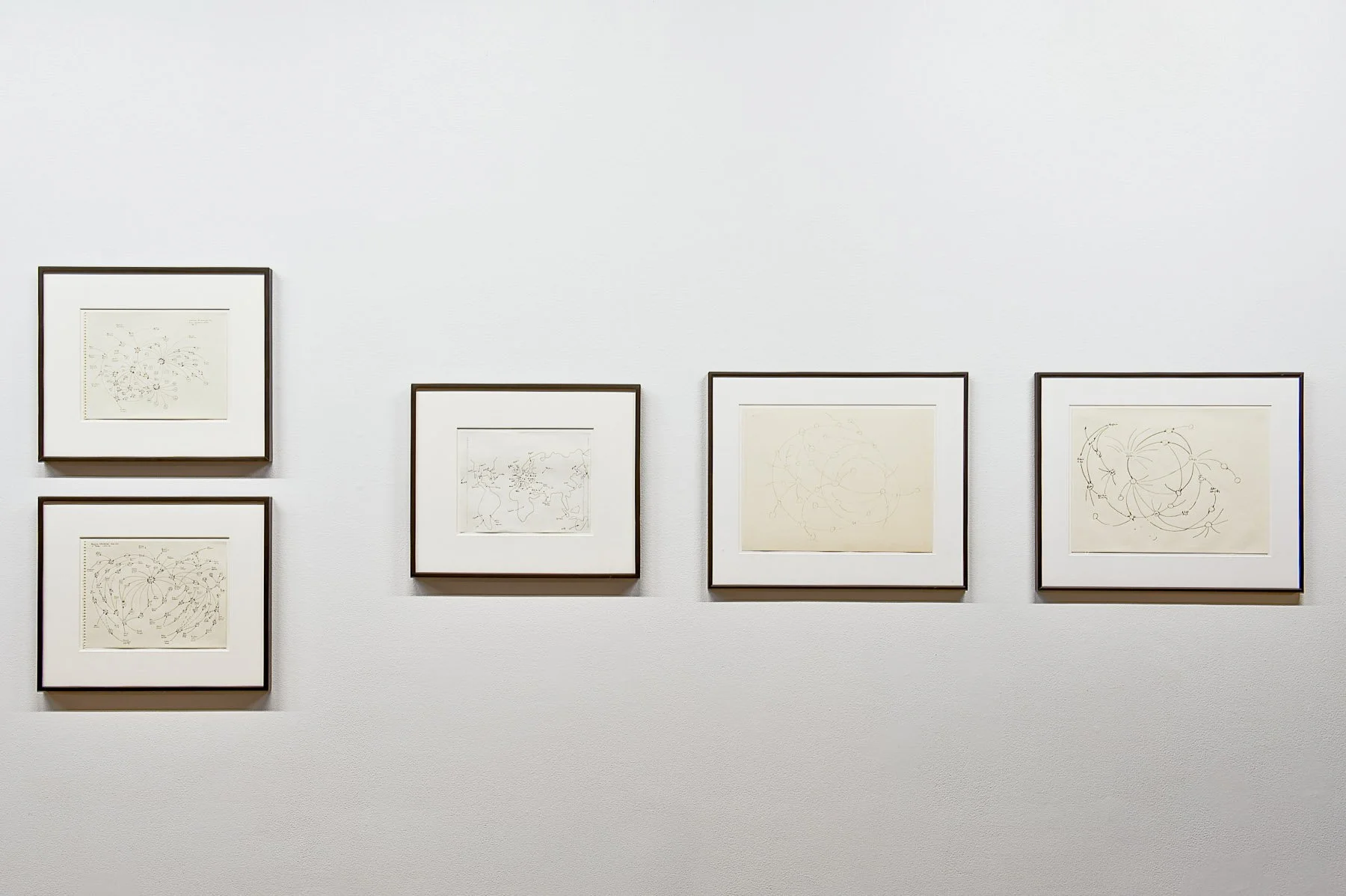
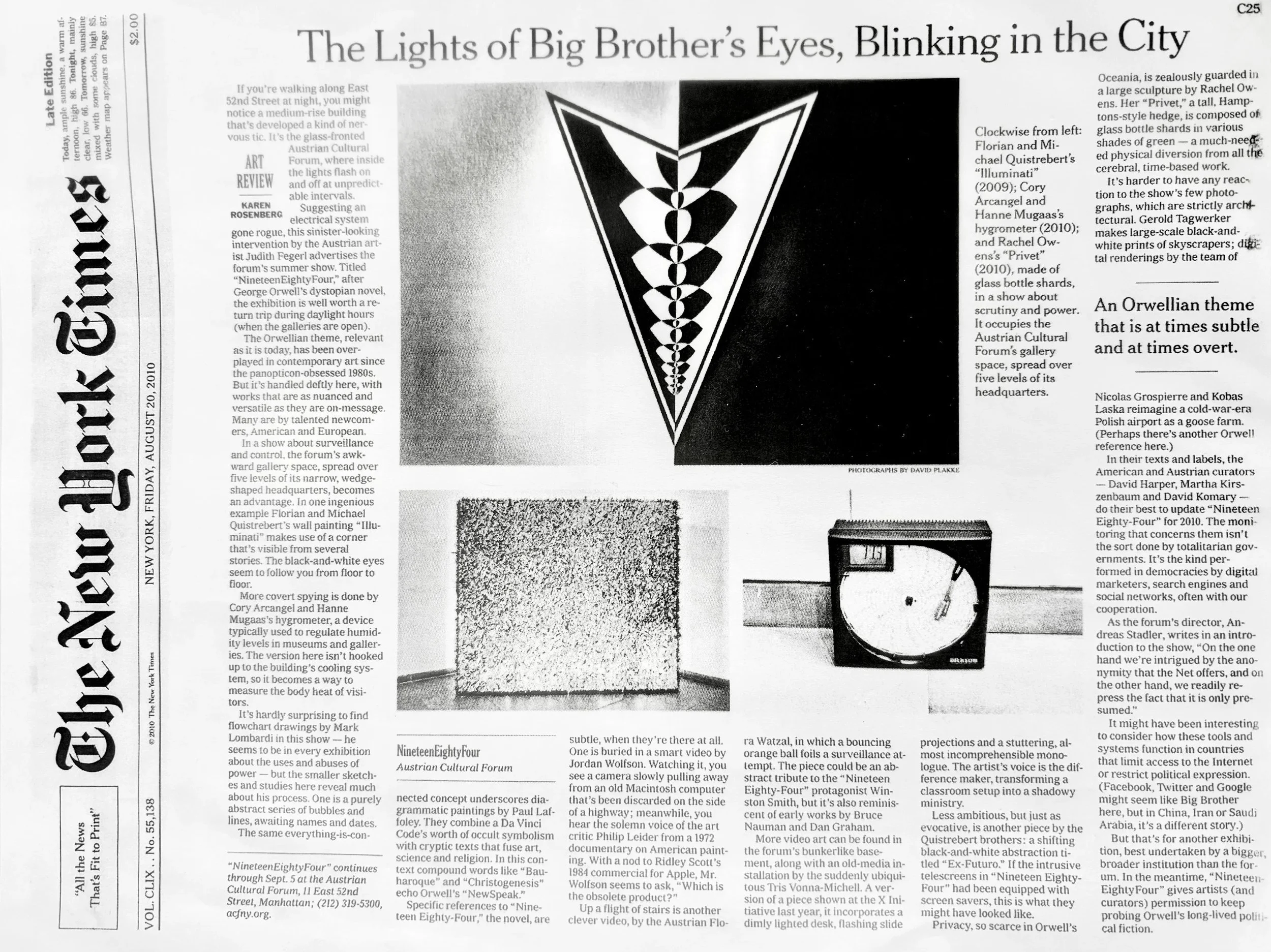
Artists inverted or exposed systems of visual control, highlighting their inherent blind spots. Mark Lombardi’s intricate network drawings mapped corrupt political and corporate ties; Flora Watzal’s Monitor strictly manipulated the viewer's gaze through frenetic video framing; and Cory Arcangel & Hanne Mugaas installed an unregulated humidity recorder, turning the ambient presence of visitors' bodies into an unpredictable variable that foiled environmental control.
Exploring the psychological weight of surveillance, Florian & Michaël Quistrebert used pyramidal forms to bridge conspiracy theories and urban architecture; Paul Laffoley mapped paranoiac, sci-fi visions in vibrant colors; and Dariusz Kowalski compiled anonymous, downloaded footage of empty rooms and streets where surveillance cameras looked only at their own reflections.
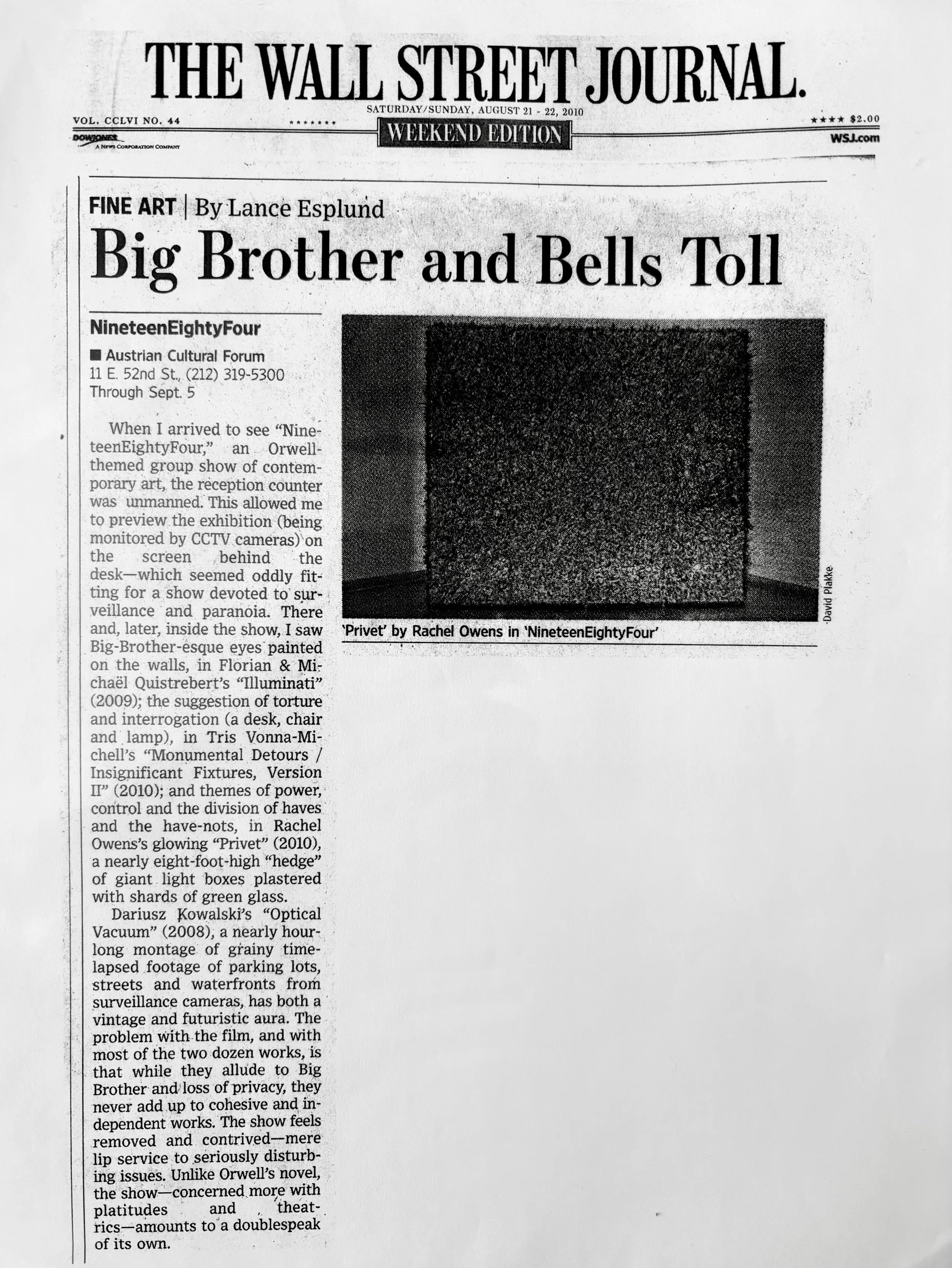
Investigating urban space as an instrument of social inclusion and exclusion, Judith Fegerl created a site-specific installation, Nystagm, transforming the building into a living, LED-driven machine; Nicolas Grospierre & Kobas Laksa presented digitally constructed photographs of Warsaw’s utopian future; Gerold Tagwerker captured the oppressive monumentality of modernist structures; and Rachel Owens exhibited a privet hedge sculpture crafted from broken green glass shards, symbolizing socio-economic barriers maintained through desire.
Examining the reduction of communication into webspeak and soundbites, Clemens von Wedemeyer staged a politician's fabricated, rehearsed inaugural address; Tris Vonna-Michell used fast-paced, obsessive narratives over vintage images; and Jordan Wolfson’s video paired a vintage Macintosh computer sitting by a highway with a disjointed voiceover about post-war painting, referencing Apple’s infamous 1984 commercial to evoke the obsolescence of technology.
Press
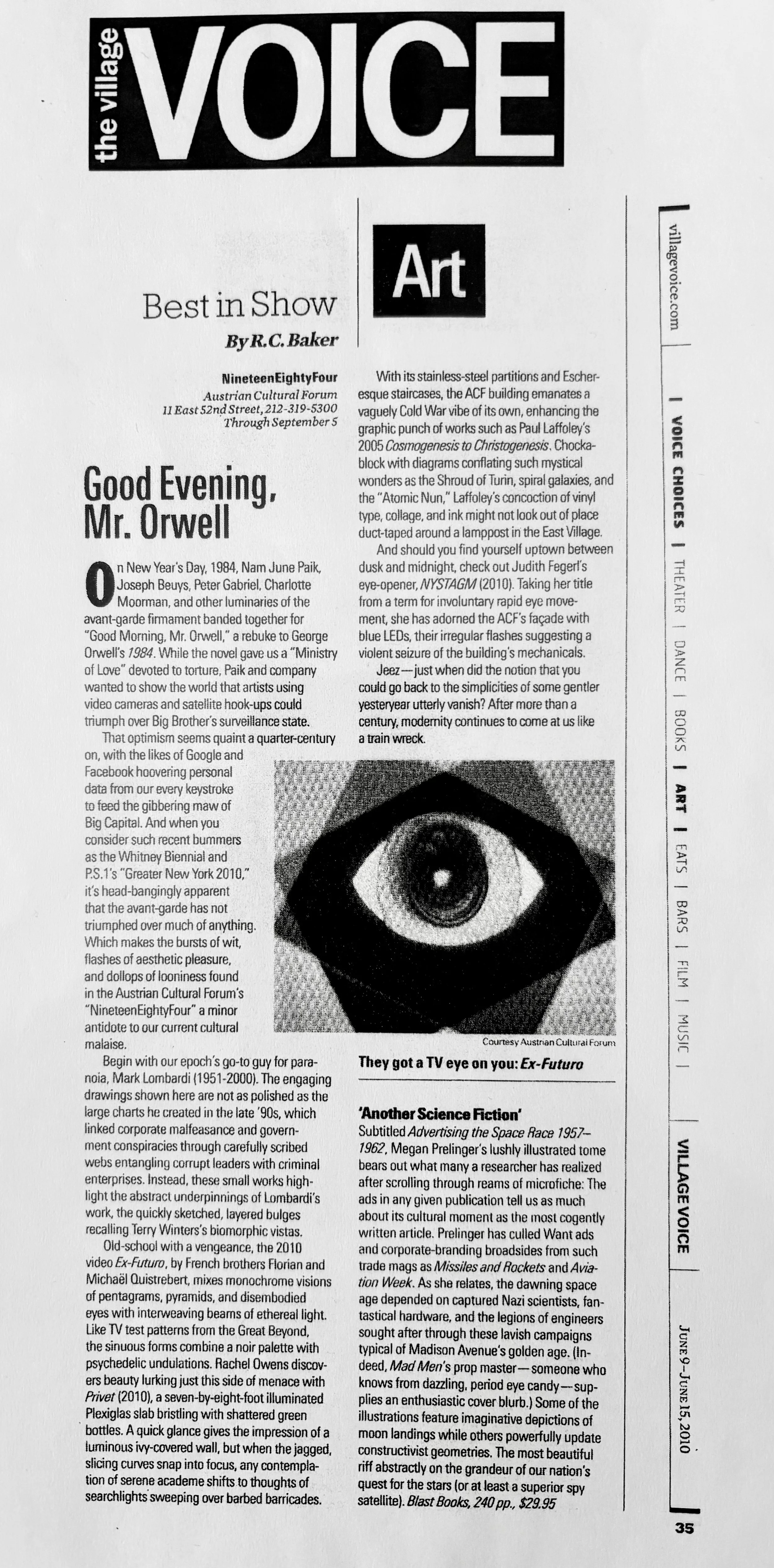
Role: Co-curator with Martha Kirszenbaum & David Komary
Date: May—September 2010
Location: Austrian Cultural Forum New York, NY
Artists: Cory Arcangel & Hanne Mugaas, Judith Fegerl, Nicolas Grospierre & Kobas Laksa, Dariusz Kowalski, Paul Laffoley, Mark Lombardi, Rachel Owens, Florian & Michaël Quistrebert, Gerold Tagwerker, Tris Vonna-Michell, Clemens von Wedemeyer, Flora Watzal, Jordan Wolfson
Photography by David Plakke